The seed snail sowing method is a relatively new way to start seeds, and it hit the gardening community by storm. Here are the answers to the many questions behind this unique and efficient growing tool.
A Farm Girl in the Making participates in multiple affiliate programs. She also participates in the Amazon Services LLC Associates Program, an affiliate advertising program linked to Amazon.com and other affiliated sites. This lets me earn a small amount of money on goods you purchase at no extra charge to you. For that, we thank you!
Seed snail sowing method: answers to your questions
This somewhat new method for sowing seeds went viral on social media in 2025. As with anything new, I decided to sit back and watch the outcome from others who utilized the seed snail roll to start seeds. To say I was impressed with the outcome is an understatement. Friends were successfully sowing seeds, using a fraction of their seed-starting space.
Fast forward to January 2026. On the farm, we use a 8′ X 16′ greenhouse dedicated to sowing seeds. This growing space has allowed us to sow two growing seasons and plant up to 1,440 seeds, using the Bootstrap Farmer 72-cell air-pruning trays. As impressive as these seed trays may be, we quickly ran into space constraints. Each year, we struggle with finding room to house the transplants that were not ready to be sown in the garden.
To feed ourselves, fulfill our CSA subscriptions, and feed our local community, we needed a solution to the space restraints we were facing.
The seed snail sowing method video
This video can also be viewed on our Instagram and Facebook accounts under @afarmgirlinthemaking.
The benefits of the seed snail method
Farida Sober created the seed snail sowing method and successfully sowed thousands of seeds this way. Based on her Instagram account, she needed a means to sow seeds that did not take up much space, as her plot in Wales was rather small at the time. Unlike a 72-cell plug tray, which is kept horizontal, the seed snail is kept vertical, minimizing the available space in the sowing space. This made it a great way to sow thousands of seeds utilizing less space. Is this the only benefit? Not at all, and I’ll discuss this further throughout the article.
Sowing seeds in this manner has been a game-changer for how we manage our time and space in the greenhouse and for how much we can sow each year.
Roughly 90% of the seeds we sow are from a small family-owned business here in the United States. Over the years, we have tested the germination rate for Sow Right Seeds and have received a 95% germination rate or higher each time. If supporting family-owned businesses is important to you, I’d encourage you to give their seeds a try. Also, take advantage of receiving 10% off your order with the code afarmgirl.
The answers to your questions about the seed snail sowing method
When the video above was shared on our Instagram and Facebook accounts, it went viral instantly. With over 1.2 million views on Instagram alone, we knew there would be questions about this unconventional method for sowing seeds.
Question: What type of seed can be sown using this method?
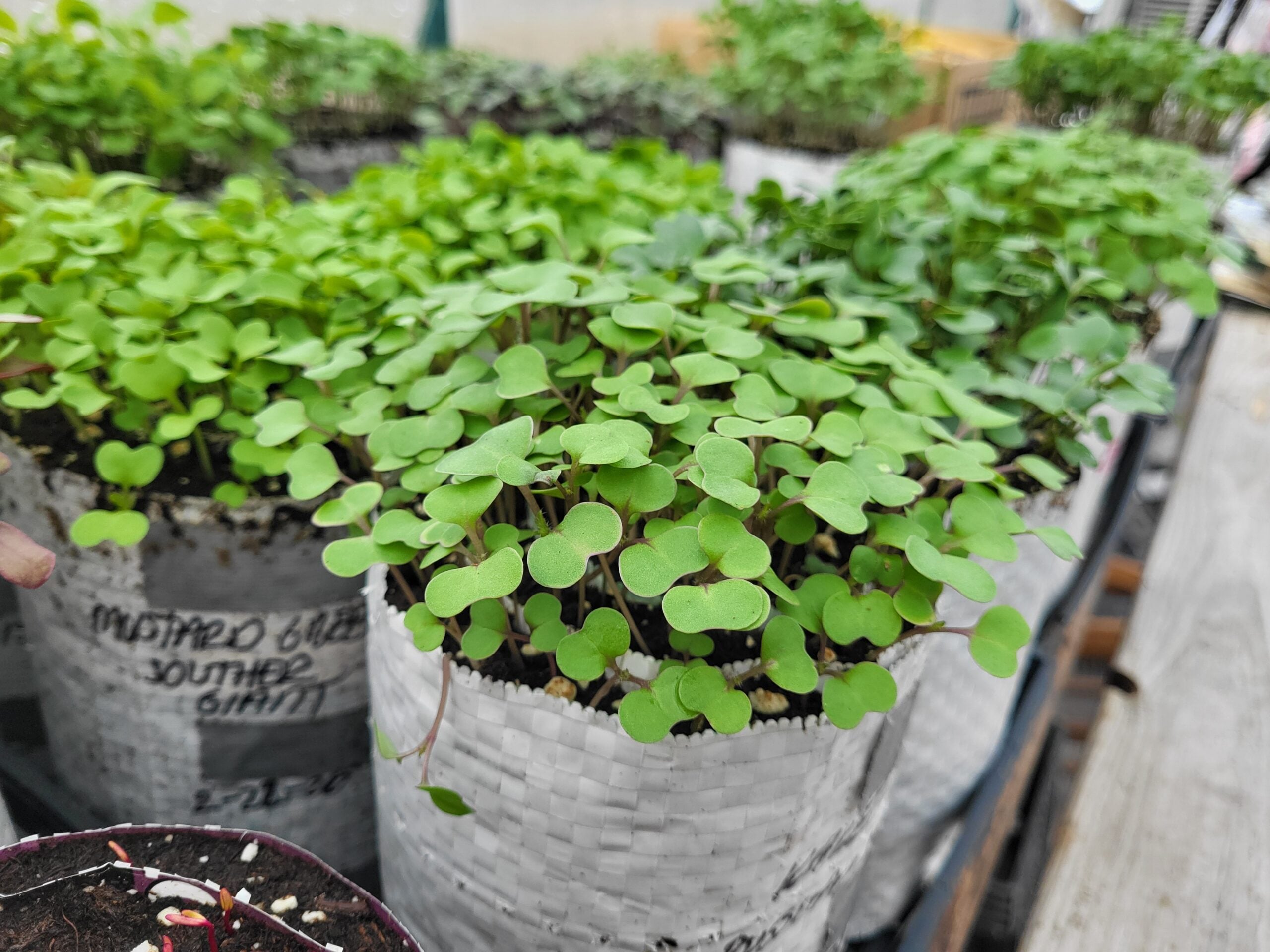
The real question is: What cannot be sown using the seed snail method? Friends, I have yet to find anything that cannot be sewn utilizing this method. Make sure to follow the instructions for how deep the seeds need to be sown.
- seeds as small as a variety of onions and German chamomile seeds to mammoth pumpkin seeds
- onion sets, Egyptian Walking onion bulbs, as well as smaller flowering bulbs
- Individuals have also propagated household plant cuttings, berry bushes, fruit trees, and elderberry cuttings successfully
The more popular this method becomes, the more people are testing its limits.
Question: What material can be used to create Sober’s method for starting seeds?
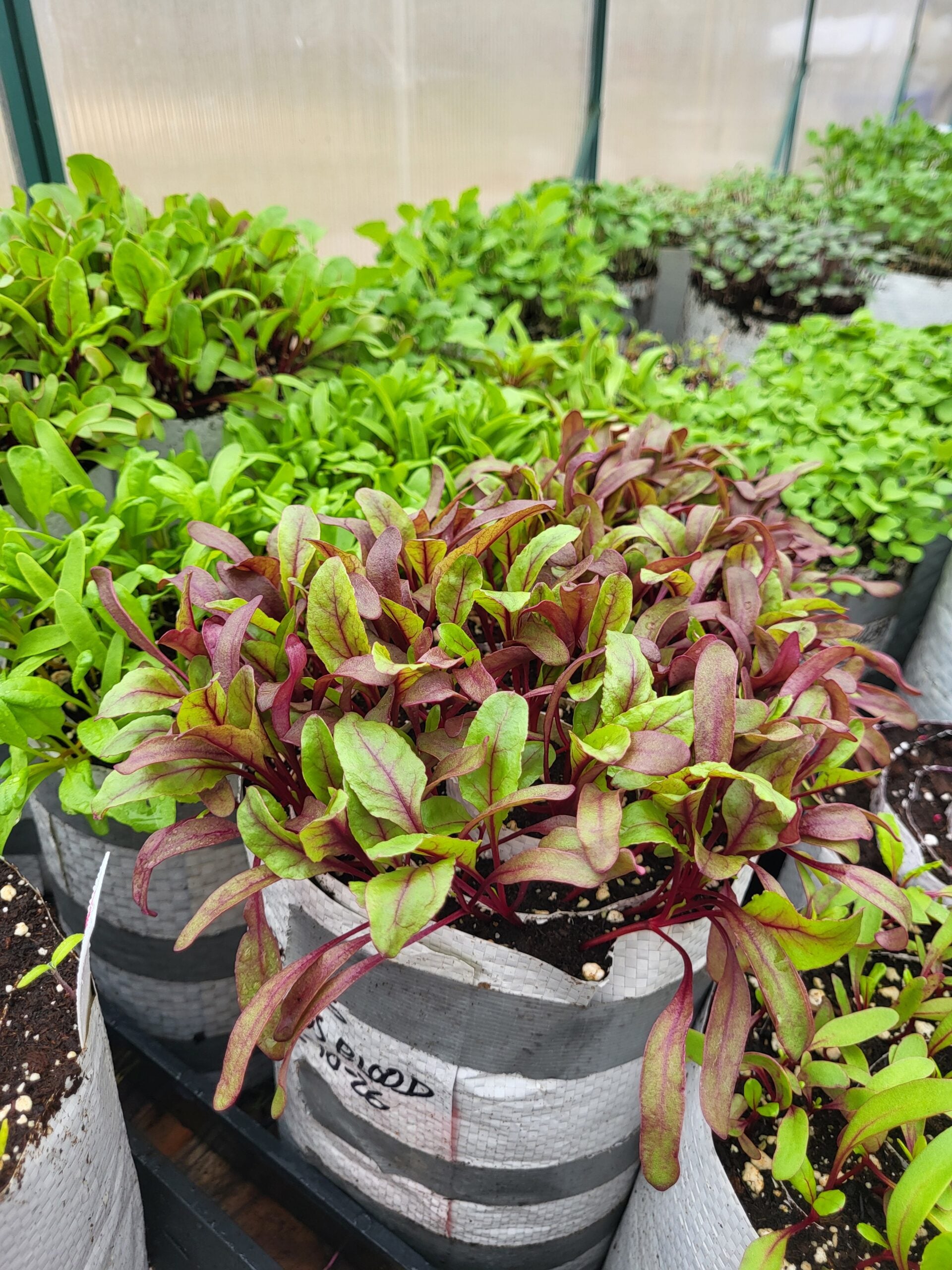
The creator of this seed sowing method states that just about any material can be used. We opted to utilize and recycle feed bags instead of sending them to the landfill. However, I have seen photos of individuals utilizing:
- foam packing roll
- bubble wrap
- polyethylene wrap (used to wrap food)
- heavy-duty plastic wrap
Many natural fibers can be used as well, and a trip to any privately owned coffee shop or thrift store will have the materials you need. Natural fibers for plastic-free options include:
- feed and coffee bags made of burlap
- recycled wool clothing or old wool military blankets
- denim jeans, jackets, or skirts
- old bath or hand towels
- heavier cotton fabric
- thinner cotton material, like bed sheets or t-shirts, may need to be doubled up to support the soil within the rolls
Question: What is used to secure the seed snail together, preventing it from falling apart?
Many items can be used to secure the roll together. As I did above, the list will include both commercial and natural products.
- duct tape
- masking tape
- freezer tape
- painter’s tape
- rubber bands
- old shoe laces
- synthetic yarn
Natural items used to secure the roll:
- burlap twine
- cotton string
- thin strips of cotton fabric
- wool or cotton yarn
Question: Microplastics are unsafe, and you’re harming yourself and loved ones. Why would you use any product that contains plastics? That’s just gross.
Yes, I received this question/statement, so I wanted to take a minute to address it.
We farm, which often means some of the livestock we raise receive a commercial feed that comes in plastic feed bags. Unfortunately, due to cost factors, many feed companies utilize plastic to package their feed. This leaves us with two options: send the feed bags to the landfill or learn how to recycle them.
When I initially shared the seed snail sowing method and my material of choice for creating the rolls, I received a few negative comments about microplastics. I was informed about how gross and dumb I was to encourage others to sow seeds with the use of plastic.
We live in a world where toxins are in our everyday foods, air, personal hygiene products, and clothing. Sadly, it can be found in just about everything nowadays, and each individual must make the choices that are best for them and their family.
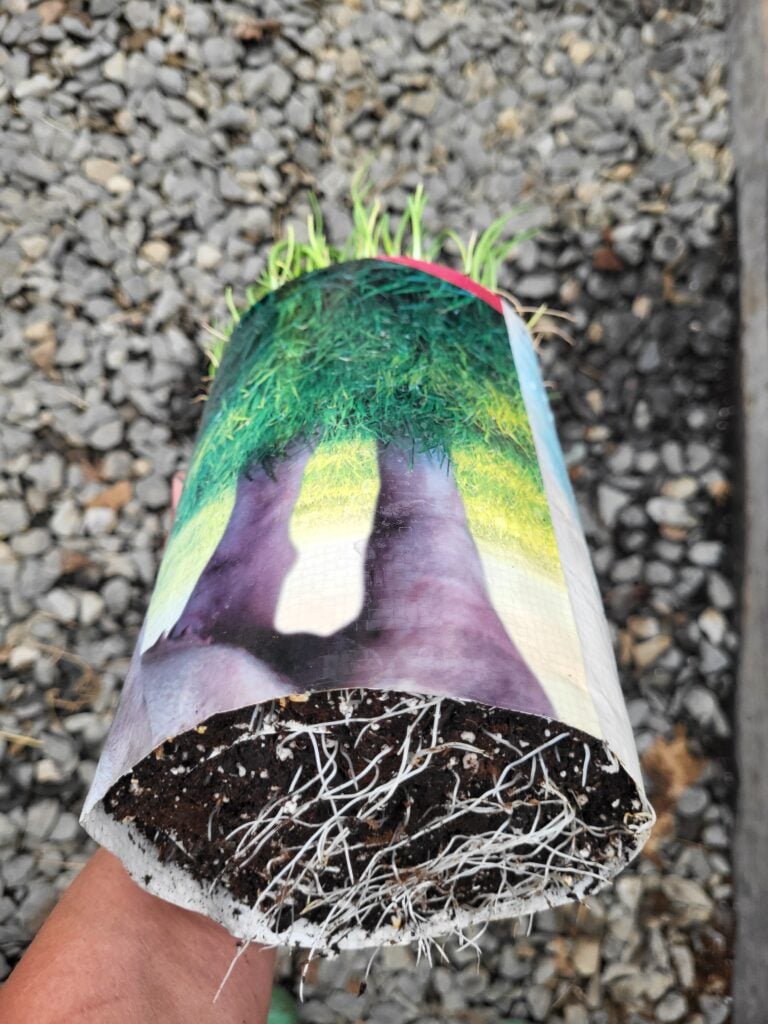
For the those who are bound to make an appearance in the comment section about possible microplastics leaching into our vegetable starts, let me ask you a few questions:
- Have you ever purchased vegetable starts from a local distributor?
- Do you eat out?
- Have you purchased foods and beverages such as milk and other dairy products, juices, packaged produce, or frozen goods from the grocery store?
- Treat yourself to a hot or iced coffee when you’re away from home?
- Do you and your family only wear 100% certified organic cotton and wool clothing?
- Do you and your family only wear 100% certified organic cotton or wool undergarments or workout clothing?
- Sleep in bedding that is 100% certified organic cotton?
Also, keep in mind that the main materials used for the winter sowing method are:
- plastic milk jugs
- gallon or two-gallon size water containers
- liter-sized soda containers
Question: Can the seeds be sown before rolling the snail?
The short answer is, yes. However, when you begin to roll the snail, you will quickly see that the soil pushes out from the top and bottom of the roll, depending on how tight the roll is. Seeds added to the snail before it was rolled can be displaced deeper than the suggested sowing depth or even fall out of the roll.
It is in your best interest to sow seeds to their appropriate depth after the seed snail has been assembled.
Question: What type of soil is used to sow seeds?
If you follow Sober on social media, she refers to her seed-starting soil as compost, and it could very well be straight compost. However, we utilize the following items to start seeds:
- Vermont Compost – Fort Vee Organic Potting Mix
- Berger BM 6 All-Purpose Mix (designed for seed starting and up-potting)
Feel free to use the seed-starting mix of your choice.
Question: How tall should the seed snail be?
This will depend on a few factors. The first: What do you intend to sow in the seed snail? The second: Do you intend to up-pot the seedlings, or sow them directly in the garden when the time is right?
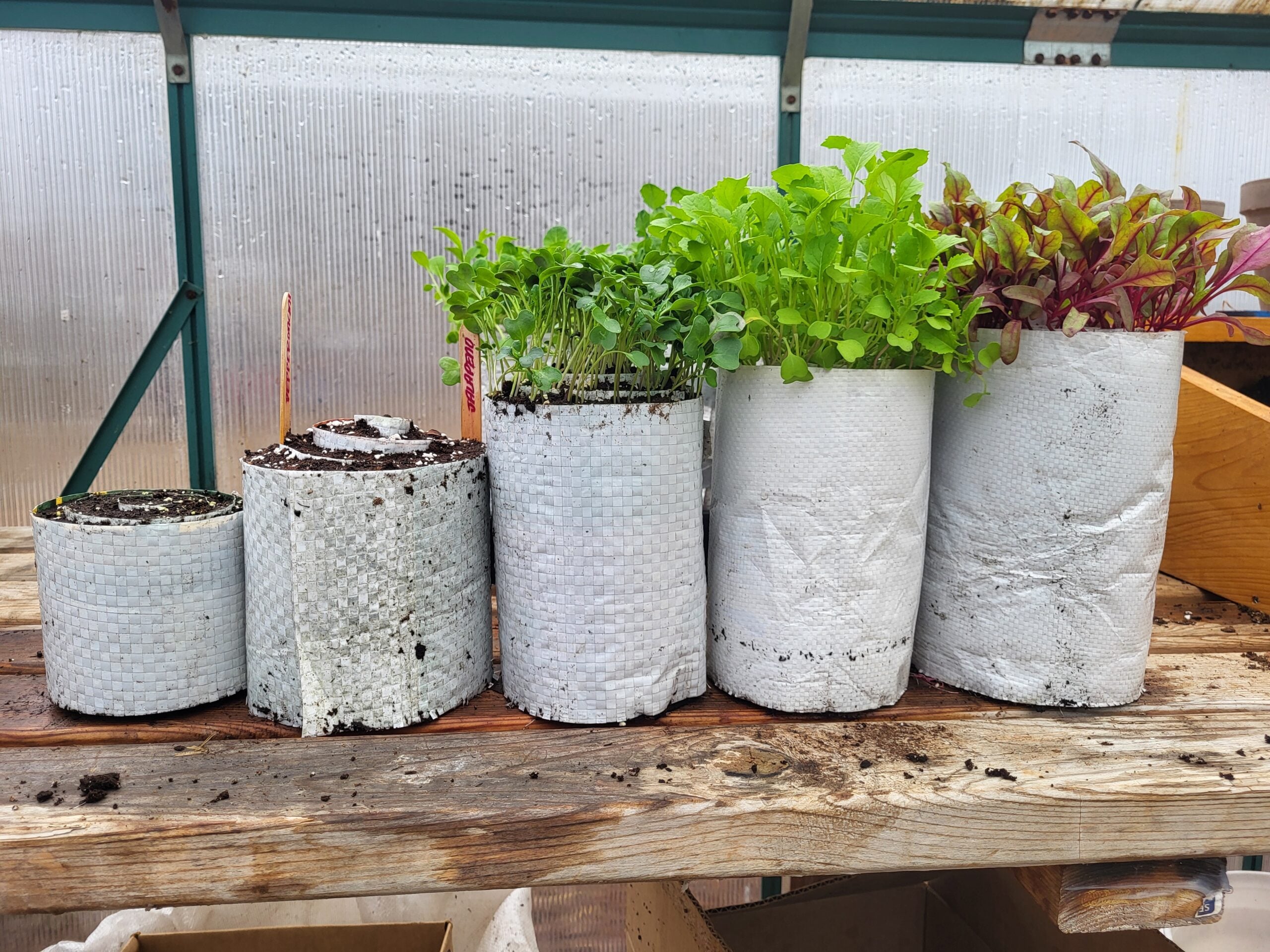
It is important to know more about the product being sown than what the seed packets share. For example, when sowing onion seeds, it is important to know that the seedlings and roots are very delicate. Damaging onion roots can stunt the bulb or prevent a bulb from forming. Damaged roots are susceptible to rotting, which will quickly kill the plant. For this reason, sowing seeds in a seed snail will call for a taller roll, allowing for a strong root system and easier transplanting.
It is okay to sow seeds in a seed snail that is between 5 and 6 inches tall if the seeds have a short germination period and are ready to be transplanted soon after germination. A good example of this is leafy greens such as arugula, lettuce, or spinach, to name a few.
Question: How many seeds can be sown in a seed snail roll, and should the seedlings be thinned?
Regardless of whether you are sowing seeds in traditional seed trays or utilizing this seed sowing method, you understand that overseeding can happen, especially with seeds that are the size of a pinhead, like thyme and chamomile, to name a few.
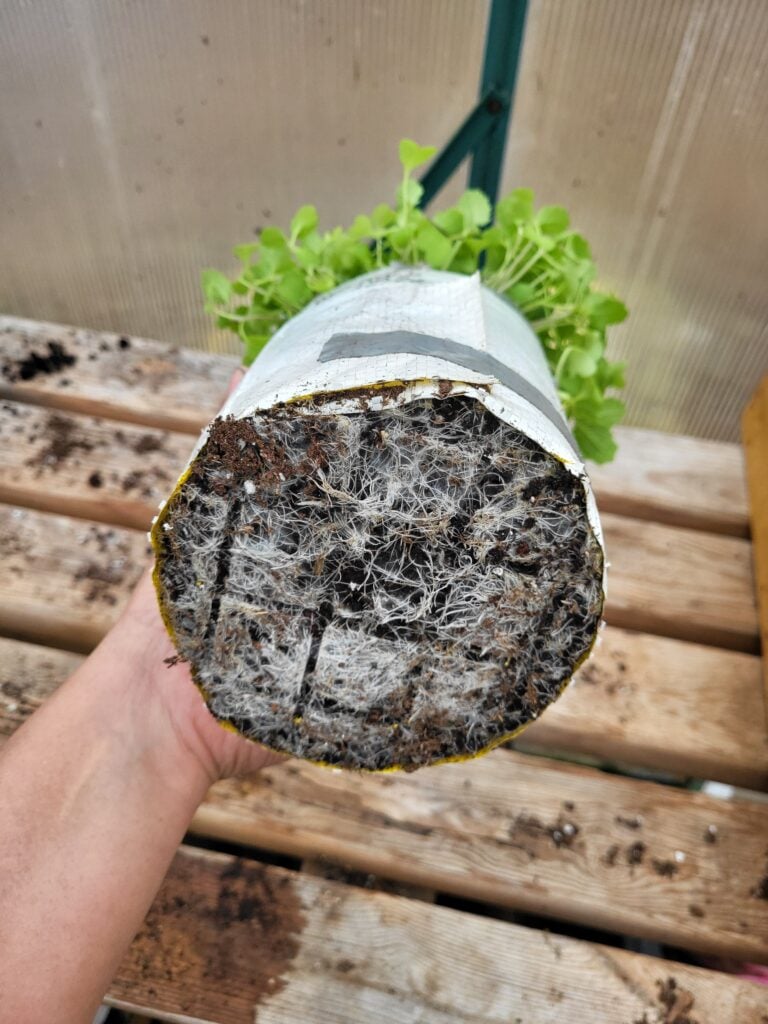
The middle photo below is thyme, a prime example of what an overseeded seed snail will look like. I fear the roots will be a tangled mess as I unroll the snail, potentially causing root damage and a weak plant that may not make it once it is sown in the garden. In truth, the thyme seedlings should have been thinned, allowing the opportunity for a plethora of strong starts to form.
Regardless, you want to use seeds with a high germination rate. About 95% of the seeds we sow are from Sow Right Seeds due to the high germination rate of the seeds they carry. However, I do order seeds that they do not carry from other seed companies. Every photo in this article contains seeds from this small, family-owned business.
If you want to give Sow Right Seed a try, you can get 10% off your order with my code, afarmgirl.
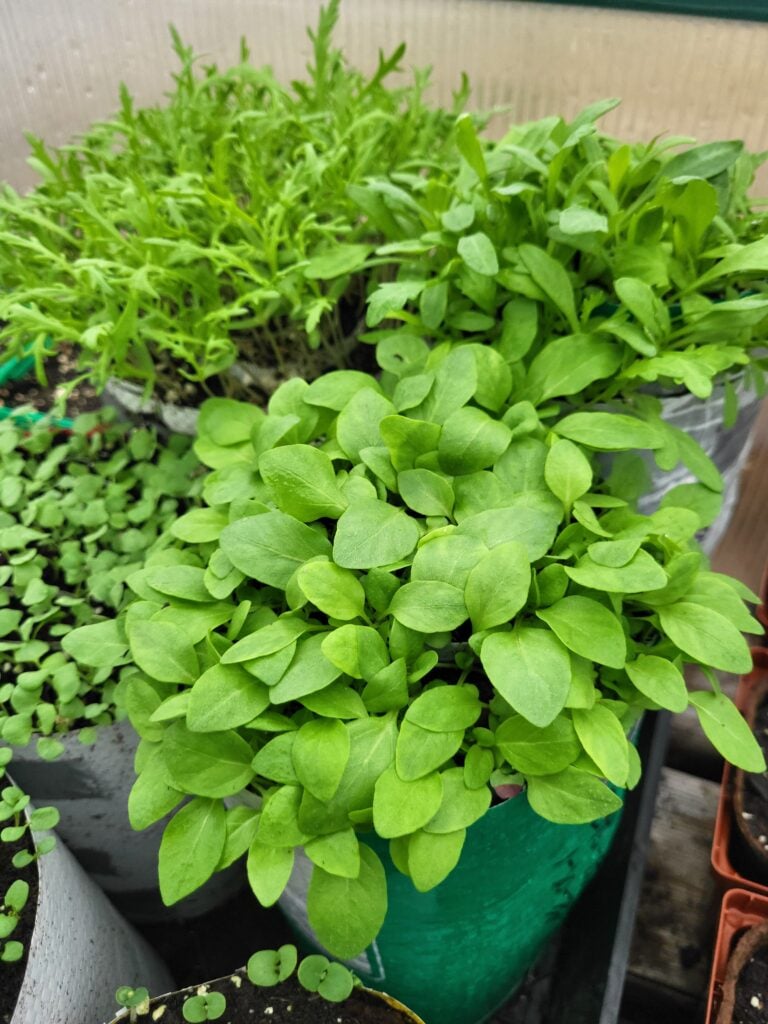
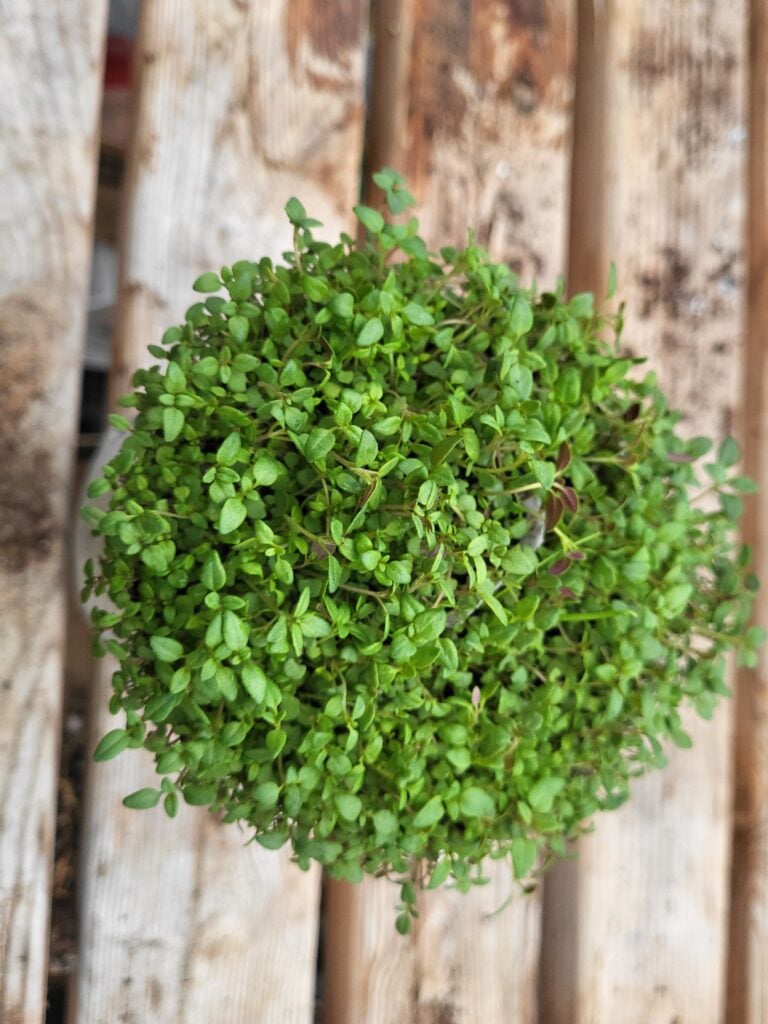
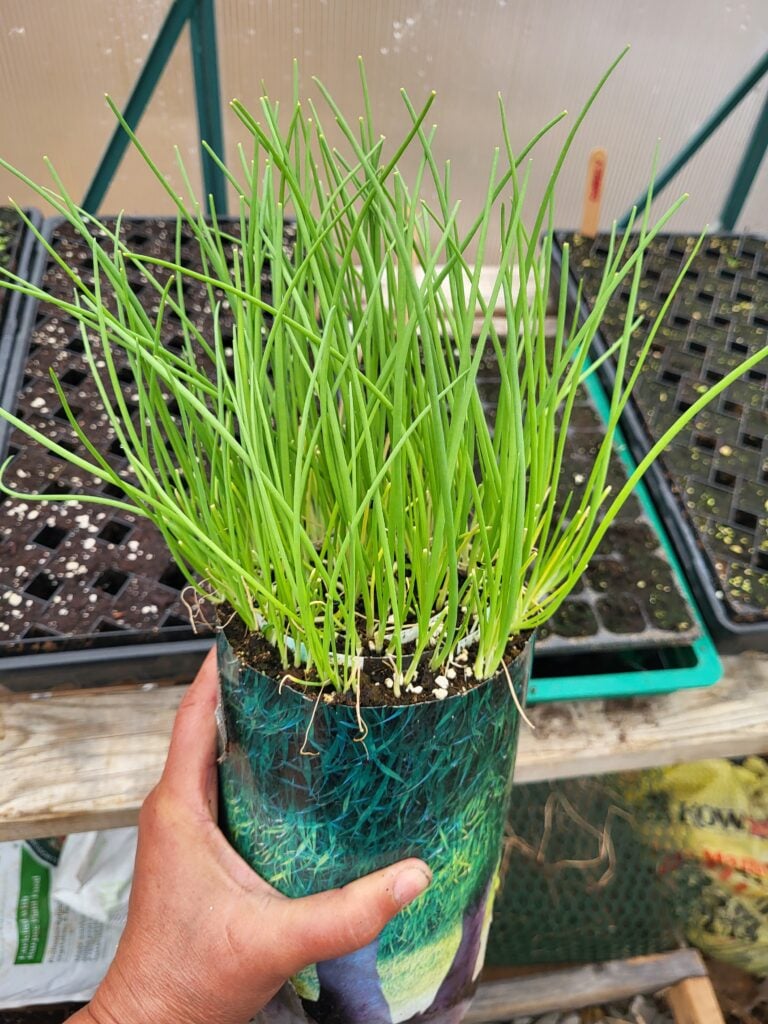
To thin a roll, never pull the start out of the soil. Instead, snip the start with clean scissors or pinch the start at the base. The root system will die soon after.
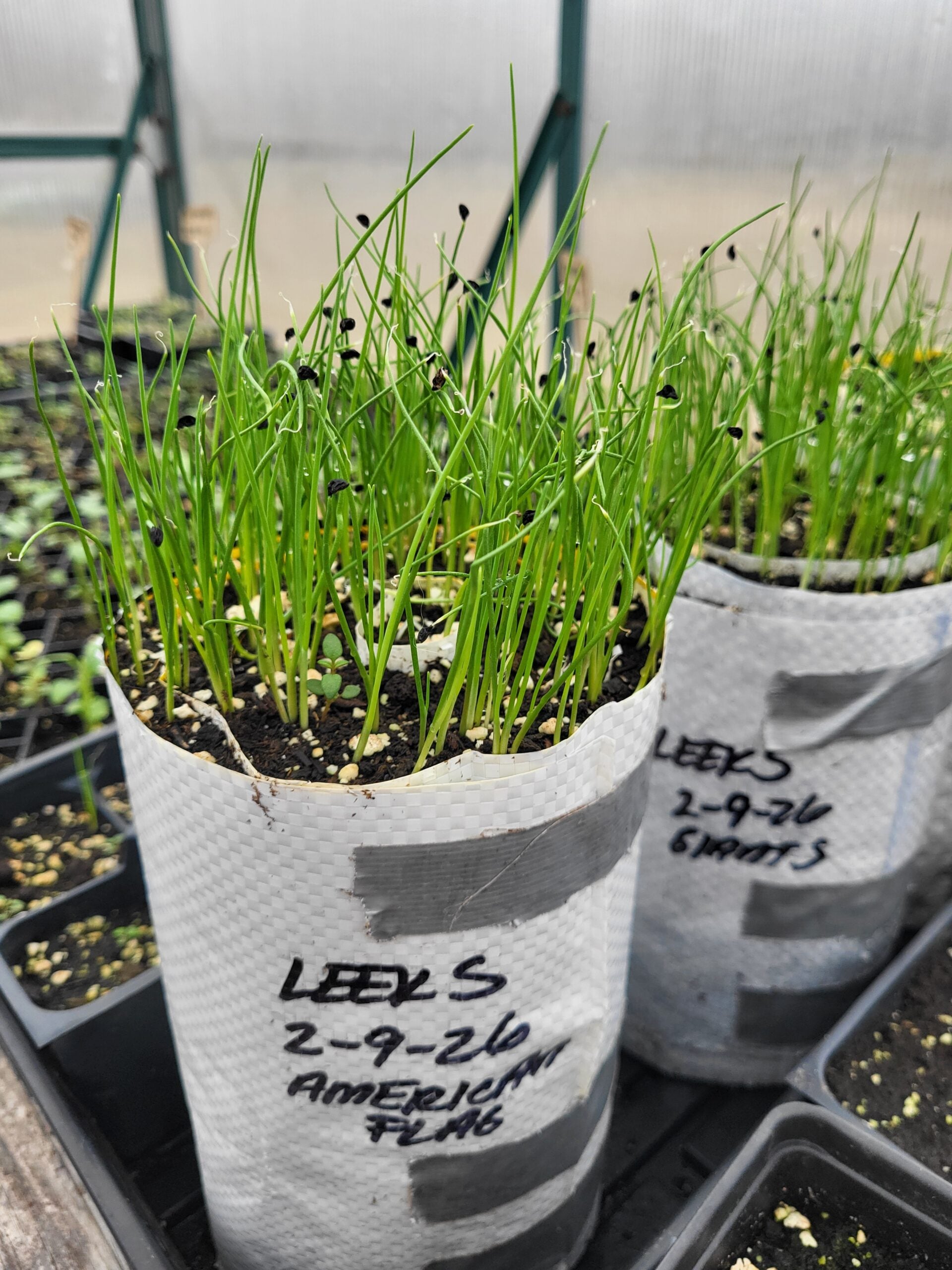
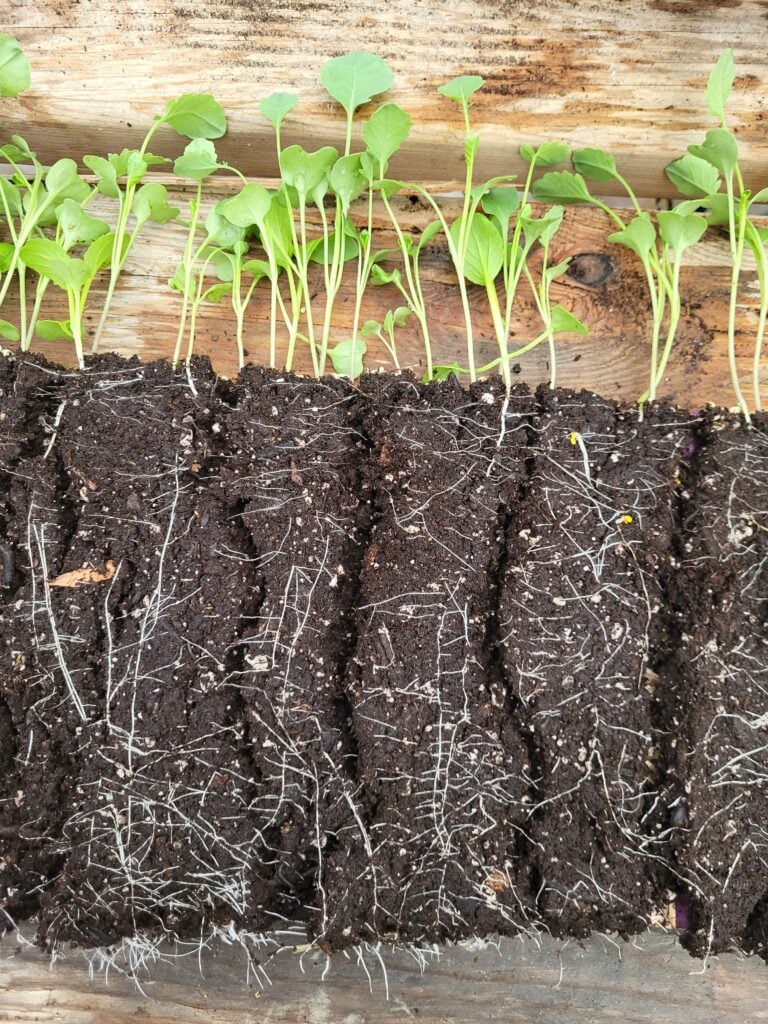
The flower snails on the left and the leek snail on the right may appear to be overcrowded; however, they are not. As the seed snail is unrolled, you will see that each seed was spaced quite intentionally, allowing for a healthy and strong start to sow in the garden.
Question: Can multiple seeds be sown in the same seed snail?
Yes, absolutely! A great example of this is tomatoes and peppers.
If you are anything like me, you like variety. Meaning, why plant 50 of the same tomato seeds in one seed snail roll? Use a plant market to indicate what is sown in the roll and where the seeds start.
If you look at the photo below, you will notice that I sow similar tomatoes together in the same seed snail. For example, slicing tomatoes such as the Cherokee Purple is sown in the same seed snail as the Cherokee Green. This allows them to transplant them in the same row, making it easier to succession plant the new transplants later in the season.
Make sure to use caution as you unroll the seed snail, as the plant marker can fall out easily if you are not careful.

Question: Is a seed mat needed to help with germination?
No, a seed mat is not needed to help seed sprout faster when utilizing this sowing method.
Seed mats are used to warm the soil, allowing the seeds to germinate during the winter and early spring months. Seed mats work with the use of electricity, and in structures like your home or in a greenhouse.
The seed snail naturally warms the soil when used with material such as feed bags or other items on the list mentioned above. Keep in mind that when sowing seeds in the winter months, you may need to provide a heat source, such as a heater, if you are planting in an outdoor greenhouse.
We keep the temperature of our seed-starting greenhouse between 45-50 degrees Fahrenheit during the winter, and have not used our seed-starting mats since we began sowing seeds using this method.
Question: How do you water the seedlings after the seeds have been sown?
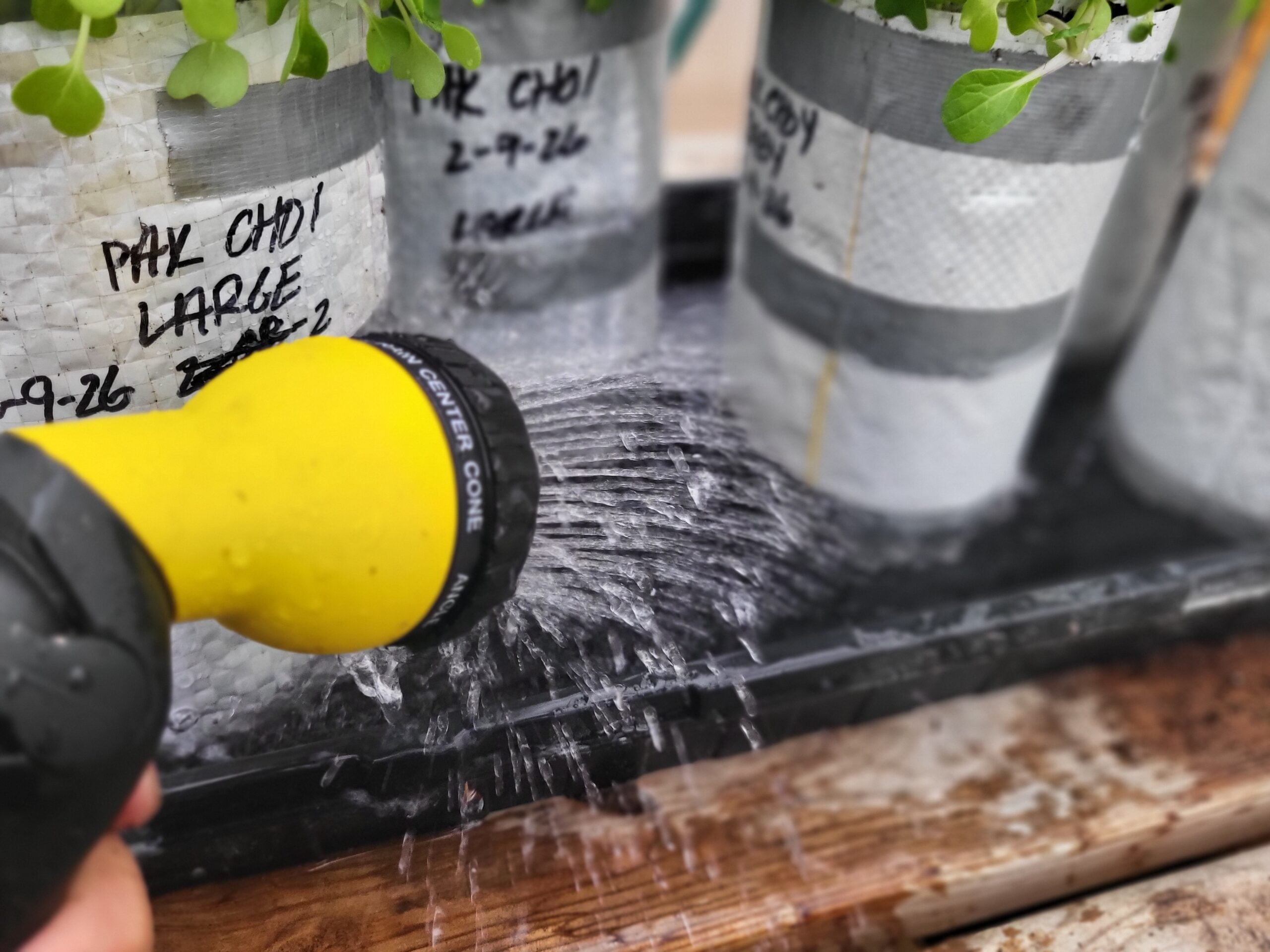
When seeds are first sown, top watering is essential to allow the water to reach the seeds, allowing for a strong germination rate. Because we sow a large number of seeds each growing season, we use the misting setting on the spray nozzle attached to our hose. For those sowing a smaller amount of seeds, misting the soil with a spray bottle works well.
Once the seeds have germinated and a minimum of two true leaves have appeared, the seed snail rolls will need to be moved to clear plastic tubs, no hole seed trays, or any container capable of holding water and the seed snail. This allows the soil to wick up moisture and encourages deep root growth.
Question: Do seedlings need to be up-potted?
The answer to this question is yes and no. Let me explain.
We reside in Tennessee (hardiness zone 7B), which allows us to have two cold-weather and two warm-weather growing seasons. Some of you may reside in colder climates with a shorter growing season. To get a head start on the growing season, you may start seeds indoors that I would direct-sow in the garden. For example, cucumbers, melons, summer squash, peas, and beans, to name a few.
As many wait for our soil to reach the appropriate temperature to set your starts, especially those who reside in hardiness zones 1-5, you may need to up-pot once, if not twice, before the starts head to the garden. However, up-potting looks different with a seed snail.
Up-potting using this method does not mean transplanting little starts into transplant pots. It simply means create a new roll and transplant starts into a taller roll. Transplanting seedlings this way saves space for you to continue sowing seeds and up-potting as needed. With that said, I would not up-pot onions, chives, bunching onions, leaks, and smaller seedlings like thyme.
Question: Does the soil erode from the bottom of the seed snail?
Yes, seed starting mix can erode from the bottom of the seed snail. Generally, the cause of erosion is not packing the soil tightly within the snail. Loose soil erodes much more quickly than tightly packed soil. Soil will also erode the longer the seedlings are kept in the roll.
Once the starts have formed their set of true leaves, it is good practice to unroll the seed snail roll and add additional soil if needed, especially if you do not intend to sow them soon.
Question: Can this seed sowing method be used in partnership with the winter sowing method?
Yes, absolutely! Seeds that require cold stratification do extremely well in combination with the winter sowing method.
Simple sow seeds that require cold stratification into the seed snail. Place the seed snail into the appropriate winter sowing vessel you wish to use, and place it in the location where winter sowing containers are kept.
Question: Do you intend to reuse the material for the rolls you created?
Yes, the material used to create the rolls will be used the following year if they are in good shape. Once the season has ended, we will wash and gently sanitize the material used to make the rolls, then hang them to dry before packing them for next season.
The proof is in the pudding, or should I say, in the harvest?
Vegetables thrive best when provided with good compost, natural fertilizers, low bug pressure, and a strong, healthy root system. Sowing seeds using the seed snail sowing method allows for a healthy plant the moment the seeds germinate, with strong, healthy roots.
I am encouraging you to give this method a try. You will not regret the outcome.
Pin this article for later
This is a lot of information to retain at once. Pin this article onto your GARDEN board on Pinterest, and refer to it each year!